European Starling Relocation Service

European Starling Relocation Guaranteed!!
“You WILL Get The Best, Most Thorough, Professional Service You Have Ever Seen… We GUARANTEE It… Or It’s FREE!”
Starlings in Your Soffits, Vents or Siding? We Move Them Out and Block the Way Back In.
5 REASONS TO CHOOSE MAJOR PEST CONTROL
- We’re committed to CUSTOMER SATISFACTION, with over thousands of Google 5 Star ratings for pest control.
- We offer a complete 58 POINT Pest Control Survey & Analysis of your home or building.
- ASSOCIATE CERTIFIED ENTOMOLOGIST and a public health specialist on staff.
- A team of EXPERIENCED PEST TECHNICIANS to carry out all pest control services.
- Our GUARANTEE is UNMATCHED by any competitors! (If you’re not happy, you don’t pay!)
CALL BY 2 P.M. FOR SAME-DAY OR NEXT-DAY AVAILABILITY!
How Do You Know It Is a European Starling (Identification)
Colour
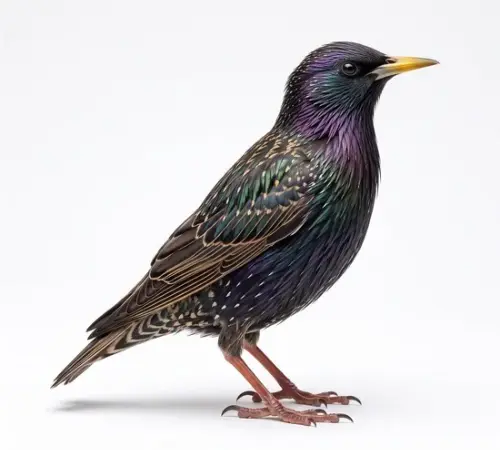
Glossy black with a purple-green shine, and white speckles in fall and winter.
Size
About 20–23 cm long, a bit smaller than a robin.
Description
Short tail, pointed bill (yellow in spring) and a noisy mix of whistles, clicks and copied sounds.
Notes
Often confused with house sparrows. Sparrows are smaller and brown.
Quick Links
Signs You Have Starling
Starlings are cavity nesters, so most signs show up around the roofline.
- Scratching, chirping or rustling in the soffit, wall or vent
- Straw, grass and feathers hanging from eaves or vent covers
- Small holes pecked in stucco or siding
- Droppings under the roofline, on decks or on the siding
- Large noisy flocks on the roof or lawn, especially in fall
Where Do Starlings Nest?
They look for any dry, enclosed gap that’s just big enough to squeeze into.
- Soffits and fascia gaps
- Dryer, exhaust and roof vents with broken or missing covers
- Gaps under eaves and siding
- Chimneys without a cap
- Barns, sheds and farm buildings
Why Do I Have Starlings?
It’s rarely about dirt. A gap in the right place is all it takes.
- Open entry points. Broken vent covers, loose soffit panels and gaps in the siding.
- Last year’s nest. Starlings tend to come back to a spot that worked.
- Food nearby. Open lawns, farm feed, garbage, compost and fruit trees.
- Quiet, warm cavities. Hard-to-reach soffits are ideal.
What Problems Do Starlings Cause?
Mostly property damage and mess, plus a few health concerns if you leave the nest in place.
- Damage: Pecked siding, chewed insulation, and nesting material that blocks vents.
- Fire risk: Nests in dryer or exhaust vents can block airflow and catch fire.
- Droppings: They stain siding and can carry bacteria and fungi, so don’t handle them bare-handed.
- Noise: Constant chattering from inside the wall or soffit.
- Farms: Large flocks can foul feed and water.
How to Keep Starlings Out
The best time is late fall through winter, once the nest is empty and before spring.
- Replace broken vent covers with sturdy metal ones.
- Seal gaps in soffits, fascia and siding.
- Cap chimneys and screen roof vents.
- Clean up old nesting material.
- Store garbage and compost with tight lids.
Fixing high soffits and rooflines means ladders and heights, and sealing a hole with birds or chicks still inside is a big mistake. That’s why it’s best to have a professional check first.
Our European Starling Relocation Process
- Inspect. We identify the bird, find the nest and check for eggs or chicks.
- Remove and relocate. We take out the nest and humanely relocate the birds.
- Seal. We close entry points and cover vents so they can’t get back in.
- Follow up. If starlings return through our repairs, we come back. See our pest control guarantee.
How Much Does Starling Relocation Cost?
Our price depends on the number of nests, the height of the entry points, how much sealing is needed, and whether it’s a house or a farm. See our pest control costs page for more detail. A free quote gives you the real number. We serve Edmonton, Calgary and Red Deer.
Get a Free Quote
Related Pest Services
FAQs About Major Pest Control Services
Wait until you’re sure the nest is empty, then remove it and seal the opening. Sealing with birds or chicks inside traps them. Because soffits are high and hard to reach, a professional can check, clear the nest and close the gap safely.
They look for dry, enclosed gaps, and a broken vent cover or loose soffit is an open door. They nest from spring into early summer and often return to the same spot each year.
They don’t attack people, but they cause damage and mess. Nests can block vents and create a fire risk, and their droppings can carry bacteria and fungi. They also compete with native birds for nesting spots.
Starlings are larger and glossy black with white speckles, with a pointed bill. House sparrows are smaller and brown or grey. Both nest in roof gaps, and both are handled the same way.
They can if the entry points stay open. Once the nest is removed, we seal the soffit, vents and gaps so there’s nowhere to nest. If they return through our repairs, we come back.


Need To Talk To a Real Human?
Our Phone Numbers: