


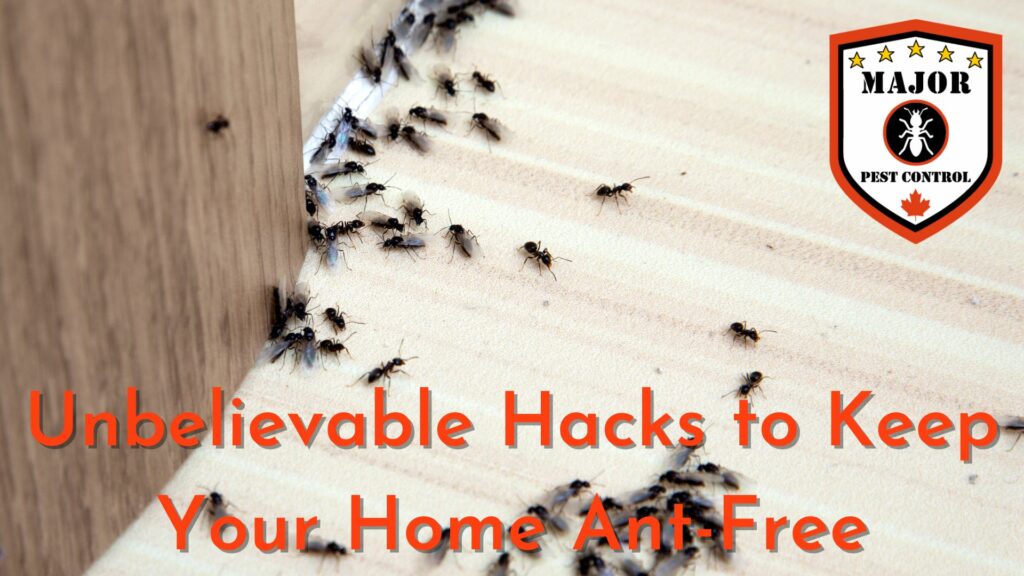
Banish Ants Forever! Unbelievable Hacks to Keep Your Home Ant-Free!
As spring arrives in Edmonton, so does the increased activity of ants, seeking new territories and resources. This seasonal movement often leads ants into local homes, causing various nuisances and potentially leading to larger infestations. Edmonton’s most common invaders, including carpenter ants and pavement ants, begin to appear in greater numbers as they search for food and establish new colonies. Understanding these patterns is crucial for timely and effective ant management. For residents facing these pest challenges, utilizing the best ant control services in Edmonton becomes essential.
Companies like Major Pest Control specialize in identifying, addressing, and preventing these seasonal ant problems, offering expertise that is crucial for maintaining a pest-free home. Engaging professional ant control in Edmonton early in the season can mitigate the impact of these pests and help prevent future invasions.
Importance of Addressing Ant Infestations Early
Addressing ant infestations at the earliest signs is vital to preventing the situation from escalating into a more severe problem that could affect the comfort and safety of your home. Early intervention minimizes the risk of ants establishing larger colonies within your structure, which can be more difficult and costly to eradicate. In Edmonton, where ant populations can grow quickly with the onset of warmer spring weather, taking swift action can save homeowners from the frustration of widespread ant damage.
For the most effective results, employing the best ant control services in Edmonton is recommended. Major Pest Control offers specialized expertise in quickly identifying and controlling these infestations, ensuring that your home remains ant-free. Engaging professionals for ant control in Edmonton not only addresses the immediate issue but also implements preventative measures to safeguard your home against future invasions.
Identifying Common Ant Species in Edmonton
Carpenter ants: Appearance and potential damage
Carpenter ants are a prevalent concern in Edmonton, known for their potential to cause significant structural damage to homes. These ants are relatively large, ranging from 6 to 12 mm in length, and are usually black, although some species exhibit red or brown coloration. Unlike termites, carpenter ants do not consume wood but excavate it to create intricate tunnels for their nests, which can weaken wooden structures over time. Recognizing the appearance of these ants and understanding the signs of their activity, such as small piles of wood shavings near woodwork, is crucial for early detection and control.
Homeowners suspecting a carpenter ant presence should seek the best ant control services in Edmonton promptly. Major Pest Control specializes in effective ant control in Edmonton, providing expert assessments and tailored solutions to mitigate the damage and prevent future infestations, ensuring the integrity and safety of your property.
Pavement Ants: Identifying Features and Typical Habitats
Pavement ants are another common species encountered in Edmonton, easily recognizable by their dark brown to black bodies, measuring about 2.5 to 4 mm in length. These ants typically make their nests in or under cracks in pavements, hence their name, but they can also be found inside homes, particularly in ground-level floors. Pavement ants are attracted to greasy and sweet foods, often leading them to venture indoors in search of sustenance. Identifying their typical habitats and access points, such as cracks in concrete or spaces under slabs, is essential for effective control.
For homeowners dealing with these persistent invaders, it’s advisable to use the best ant control services in Edmonton. Major Pest Control provides specialized ant control in Edmonton, employing strategic treatments that target both the ants and their colonies, thereby mitigating the chance of reinfestation and ensuring a long-term solution to ant problems.
Reasons Ants Invade Your Edmonton Home in the Spring
As the harsh Edmonton winter gives way to the milder temperatures of spring, ants begin seeking shelter and warmth, often leading them into homes. After months of dormancy, these pests emerge in search of conducive environments to sustain their colonies and restart their lifecycle. Homes provide not only an escape from the fluctuating outdoor temperatures but also potential sites for establishing new colonies in the warmth of wall voids or under floors.
This seasonal migration highlights the necessity for effective ant control in Edmonton, as early intervention can prevent these pests from becoming permanent residents in your property. Major Pest Control offers premier ant control services in Edmonton, specializing in techniques that efficiently identify and eradicate ants while ensuring they do not return, thereby keeping your home secure and comfortable throughout the year.
In Search of Food and Water as Temperatures Rise
As temperatures rise in the spring in Edmonton, ants become increasingly active and begin their quest for food and water, which often leads them into residential areas. These pests are drawn to the easy accessibility of sustenance found in homes, such as crumbs, spills, and pet food, which are particularly attractive as they rebuild their energy reserves after winter. Additionally, the melting snow and spring rains provide moisture that ants need for survival, making homes an ideal target due to leaking pipes or damp basements.
To combat this seasonal surge, employing effective ant control in Edmonton is crucial. Major Pest Control, recognized for offering some of the best ant control services in Edmonton, specializes in implementing strategic measures to not only eliminate existing ant infestations but also prevent future occurrences by addressing sources of food and water within the home.
Early Signs of an Ant Infestation
One of the earliest indicators of an ant infestation is the sighting of visible trails and increased ant activity within your home. As ants begin to forage for food, they establish well-defined paths that are followed by other members of the colony, often leading to and from sources of food and water. These trails can typically be seen in kitchen areas, along baseboards, and near any moisture sources. Spotting such ant activity shouldn’t be ignored as it usually signifies a larger colony nearby. At the first sign of these trails, it’s advisable to contact a professional for ant control in Edmonton.
Major Pest Control offers expert ant control services in Edmonton, providing thorough inspections and tailored solutions to intercept these early signs and prevent them from escalating into a full-blown infestation. Our proactive approach helps maintain the sanctity of your living spaces, keeping them free from unwanted pests.
Signs of Nesting Inside and Around your Home
Detecting signs of ant nesting inside and around your home is critical to preventing a full-scale infestation. Ant nests can often appear as small piles of soil or debris in sheltered areas such as under stones, in rotting wood, or even within the walls of your home. Indoors, you might notice loose ant soil between boards or beams, or a fine sawdust-like material that has been excavated by carpenter ants.
These signs suggest that ants are establishing or have already established a colony close to or inside your living areas. Prompt action upon noticing these signs is essential to control the situation. For comprehensive ant management, seeking the best ant control services in Edmonton is a prudent choice. Major Pest Control, a leader in ant control in Edmonton, can assess the severity of the problem and apply targeted treatments that effectively eliminate ant colonies and secure your home against future invasions.
Initial Steps to Combat Ants
Implementing immediate cleaning strategies is a crucial first step in combating ant invasions in your Edmonton home. Ensuring that all food residues, crumbs, and spills are promptly cleaned up can greatly reduce the attraction for ants seeking nourishment. This includes regularly vacuuming or sweeping floors, especially in dining and kitchen areas, and keeping countertops and pantries clean and free of exposed food. Storing food in sealed containers and managing garbage efficiently by taking it out regularly and keeping bins sealed are also key practices.
Despite these efforts, if ants continue to be a problem, it may be time to consider professional ant control in Edmonton. Major Pest Control offers the best ant control services in Edmonton, providing expert assessments and tailored solutions to not only address immediate ant issues but also prevent future infestations, ensuring your home remains a no-go zone for ants.
Sealing Entry Points to Prevent Further Access
Alongside diligent cleaning, sealing entry points is a fundamental strategy in preventing ants from accessing your home. It’s important to inspect your property thoroughly for any cracks, holes, or gaps in the exterior walls, foundations, windows, and doors. Using caulk to seal these potential entryways can significantly hinder ants’ ability to enter. Pay special attention to areas where utility pipes and wires enter the house, as these are common yet overlooked entry points for pests.
Natural Ant Deterrents and Remedies
Natural ant deterrents, such as essential oils and vinegar, can be an effective and eco-friendly methods for managing minor ant problems in your home. Essential oils like peppermint, tea tree, and lemon not only emit pleasant scents but also naturally repel ants due to their potent aromatic properties. Applying these oils along ant trails and entry points can disrupt their scent trails and deter their movement into your home. Similarly, vinegar, due to its strong acidic nature, can erase scent trails and act as a repellent. A solution of vinegar and water can be sprayed directly on surfaces where ants are frequently seen.
While these home remedies can provide temporary relief, they may not suffice for more serious or persistent infestations. For such cases, professional ant control services in Edmonton become essential. Major Pest Control, renowned for offering the best ant control services in Edmonton, can provide a more comprehensive and lasting solution to your ant problems, ensuring your home remains ant-free using the safest and most effective strategies available.
Benefits of Using Diatomaceous Earth and Borax
For those seeking natural yet powerful solutions for ant control, diatomaceous earth and borax offer significant benefits. Diatomaceous earth is a fine powder made from fossilized algae, and it works by dehydrating ants and other crawling insects upon contact, making it a safe and non-toxic option for households. It can be sprinkled around entry points and areas where ant activity is high. Borax, on the other hand, acts as a stomach poison for ants when mixed with sweet attractants like sugar.
This mixture can be placed near ant trails, effectively killing the ants that ingest it and carry it back to their colony. Both substances are excellent for targeted ant control but may require careful application to avoid non-target effects, especially around pets and children. If these measures do not fully resolve your ant issues, Major Pest Control provides expert ant control services in Edmonton, ensuring thorough and professional handling of more stubborn or extensive infestations. Our commitment to delivering the best ant control services in Edmonton means your ant problems will be managed efficiently and with lasting results.
DIY Ant Control Solutions
For those in Edmonton looking to tackle ant infestations with DIY solutions, homemade bait recipes can be a cost-effective and efficient approach. A popular recipe involves mixing borax with sugary substances such as honey or syrup. This combination attracts ants due to the sugar, while the borax acts as a toxin that the ants carry back to their colony, effectively killing many ants at the source. Another effective bait can be created by dissolving sugar in water and adding borax, which then can be soaked into cotton balls and placed near ant trails.
While these DIY solutions can be initially effective for minor infestations, they may not be sufficient for larger or more persistent problems. In such cases, seeking the best ant control services in Edmonton is advisable. Major Pest Control specializes in comprehensive ant control in Edmonton, offering professional assessments and treatments that ensure all aspects of the infestation are addressed, providing lasting relief and protection for your home.
Recommendations for Effective Store-Bought Products
For those dealing with ant invasions in Edmonton and seeking immediate solutions, a variety of effective store-bought products are available. Ant baits, which come in gel or solid form, are particularly useful as they contain attractants mixed with slow-acting insecticides, allowing ants to carry the poison back to their colony, effectively reaching the queen and other colony members. Insecticidal sprays can also provide quick results by killing ants on contact, although they are less effective at eliminating the colony long-term.
Additionally, granular ant killers can be sprinkled around the perimeter of your home to create a barrier that kills ants as they cross. While these products can offer quick relief, persistent or large-scale infestations might require a more comprehensive approach. For such cases, professional ant control in Edmonton is recommended. Major Pest Control provides top-notch ant control services in Edmonton, ensuring thorough extermination and ongoing protection against future infestations with tailored treatment plans that suit your specific needs.
When to Call Major Pest Control
Identifying the Limits of Home Remedies
While home remedies can be effective for managing minor ant issues, there are clear signs when it’s time to call in professionals for ant control in Edmonton. If you notice that ant trails reappear quickly after treatment, or if you discover multiple colonies around your home, these are indicators that home solutions are not sufficient. Additionally, if carpenter ants are involved, which can cause structural damage to your home, professional intervention is crucial to prevent significant harm.
Major Pest Control offers the best ant control services in Edmonton, equipped to handle more severe and entrenched infestations with advanced techniques and products. When DIY methods fall short, relying on our professional services ensures that your ant problem is thoroughly assessed and effectively resolved, protecting your home and health from ongoing ant activity.
Benefits of professional ant control services
When dealing with ant infestations, the benefits of professional ant control services cannot be overstated. Major Pest Control, a leader in ant control in Edmonton, provides specialized expertise that far exceeds the effectiveness of DIY methods. Our trained technicians use state-of-the-art equipment and environmentally safe products that are not typically available to the public.
These professional-grade treatments are designed to penetrate ant colonies deeply, eliminating not just the ants you see but also those hidden away. Furthermore, professional services ensure that the treatment is thorough, preventing recurrence by addressing all potential sources and entry points. By choosing Major Pest Control for your ant control needs in Edmonton, you gain the assurance of a comprehensive, long-lasting solution, allowing you to enjoy a pest-free home without the guesswork and continual effort that come with home remedies.
Professional Ant Treatment by Major Pest Control
What to Expect During a Professional Ant Extermination
When you enlist Major Pest Control for ant extermination in Edmonton, you can expect a thorough and professional service tailored to effectively resolve your ant issues. Our process begins with a detailed inspection of your property to identify the type, location, and extent of the infestation. Based on these findings, our expert technicians will develop a customized treatment plan that may include the use of specialized baits, gels, and insecticides designed to target the colony’s structure and eliminate the queen.
Safety measures are always a priority; we ensure that all treatments are conducted with the utmost care to protect your family and pets. Throughout the treatment process, our team will keep you informed and provide clear instructions on any necessary precautions or additional steps you might need to take. Choosing Major Pest Control for ant control in Edmonton means selecting a service that is committed to delivering effective, efficient, and lasting results.
Long-Term Ant Control Strategies and Follow-Up
Choosing Major Pest Control for your ant control needs in Edmonton ensures not only the immediate eradication of ants but also long-term strategies to prevent their return. After the initial treatment, our team provides follow-up services to monitor the situation and assess the effectiveness of the control measures. We will also offer advice on preventive practices such as sealing entry points, managing waste effectively, and maintaining proper yard cleanliness to discourage ants from re-establishing. Additionally, we can set up ongoing maintenance plans tailored to your specific situation, ensuring that your home remains ant-free.
Our commitment to providing the best ant control services in Edmonton includes educating our clients on how to sustain a pest-free environment through practical, everyday actions combined with professional support. Trust Major Pest Control to not only address your current ant problems but to also safeguard your home against future infestations.
Preventive Measures to Keep Your Home Ant-Free
Routine practices to maintain an ant-free home
To maintain an ant-free home in Edmonton, incorporating routine practices into your daily and seasonal home maintenance routine is essential. Regular cleaning, such as wiping down counters, vacuuming floors, and disposing of garbage promptly, plays a crucial role in eliminating food sources that attract ants. Additionally, addressing moisture issues like fixing leaky faucets and ensuring good drainage around your property can deter ants, who are often drawn to moist environments.
Sealing entry points such as cracks and crevices around windows, doors, and foundation also prevents ants from entering your home. For those who need further assistance or are dealing with recurrent issues, Major Pest Control offers the best ant control services in Edmonton. We can provide regular inspections and tailored interventions to ensure your home remains ant-free, leveraging professional-grade solutions and strategic preventative measures.
Landscaping Tips to Minimize Ant Access
Effective landscaping is a critical component of ant control strategies for any home in Edmonton. To minimize ant access, it’s advisable to keep tree branches and shrubbery trimmed back from the house, as ants can use these as bridges to enter your home. Ensure that mulch is not piled up against the exterior walls, as it can provide ideal nesting sites for ants. Instead, use less attractive materials like stone or rubber mulch and maintain a barrier of at least a few inches between the mulch and your home’s foundation.
Additionally, regular maintenance to clear away debris and standing water can remove potential ant harborage sites. For homeowners seeking comprehensive solutions, Major Pest Control offers the best ant control services in Edmonton, providing expert advice and tailored services that extend beyond the home to encompass property-wide preventative measures, ensuring your surroundings are not conducive to ant infestations.
FAQ: Frequently Asked Questions
What should I do if I see an ant in my house?
If you notice an ant or a few ants in your house, start by cleaning any food residues, crumbs, and spills immediately, as these can attract more ants. Check for any potential entry points and seal them. If you continue to see more ants, it might indicate a larger problem that could require professional intervention.
How can I tell if I have a serious ant problem?
Signs of a serious ant problem include seeing large numbers of ants consistently, especially in kitchen areas or where food is stored. Spotting trails of ants, finding their nests inside or around your home, or wood damage (particularly with carpenter ants) are also indicators of a significant infestation.
Are the treatments safe for pets and children?
Yes, the safety of your family and pets is a top priority. We use treatments that are effective against ants while still being safe for pets and children when applied according to guidelines. We also offer eco-friendly treatment options and will discuss any precautions you need to take following treatment.
How often should I inspect my home for ants?
It is advisable to inspect your home for ants regularly, especially during warmer months when ants are most active. At a minimum, a thorough inspection should be done annually. However, if you live in areas prone to ants or have had infestations in the past, more frequent inspections might be necessary.
What are the guarantees of your ant control services?
Major Pest Control is committed to delivering effective ant control solutions. We guarantee our services by providing follow-up treatments if the initial treatment does not resolve the ant problem. Our goal is to ensure your complete satisfaction with a pest-free home, and we stand by our services with reliable customer support and service guarantees.